What Learning a New Language Taught Me About Communicating With Dogs
When I moved to Japan, I knew communication was going to be one of my biggest challenges.
I've learned other languages before. Spanish was actually my first language, and English is now the language I primarily speak. So I wasn't completely unfamiliar with the process of learning how to communicate in another language.
Japanese, however, has been an entirely different experience.
I've been learning that knowing the words isn't enough. Japanese is highly contextual, with different levels of politeness and ways of speaking depending on who you're talking to. Subjects are often implied rather than explicitly stated. Even saying "no" isn't always as straightforward as, well, saying no.
And then there's me, trying to order food by pointing at something and piecing together the Japanese I know.
It has been humbling, occasionally frustrating, and, more often than not, pretty funny.
But after several months of navigating life in Japan, I've started thinking differently about communication itself—and surprisingly, I've found myself thinking a lot about dogs.
Communication Is More Than Words
One of the most interesting things about living here is realizing just how much communication can happen when two people don't share much of a language.
I have a friend, Miho, who speaks almost no English. My Japanese is still limited. And yet, we talk.
Sometimes it's a challenge. Sometimes we're trying to figure out something as seemingly simple as the difference between “left," “right," and “light." Those sounds are particularly difficult when you're moving between Japanese and English, and misunderstandings happen constantly.
But we've turned the hard part into a game.
We point. We gesture. We try again. We laugh at ourselves. We pay attention to each other's reactions.
And eventually, we figure it out.
I've realized that keeping the energy fun and positive gets us much further than becoming frustrated when the other person doesn't understand.
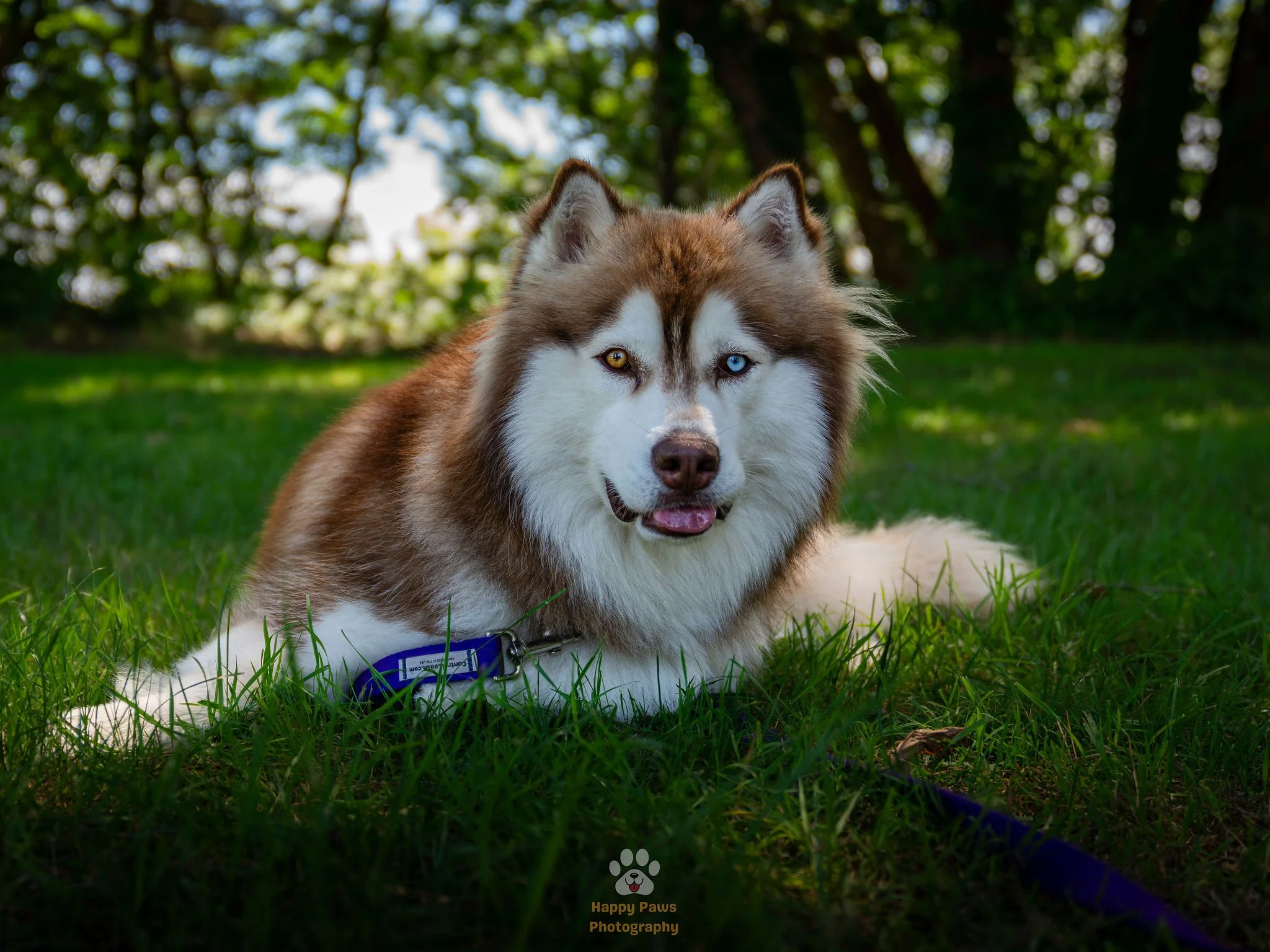
If you've ever tried to convince a dog to do something during a photo session, you may already see where I'm going with this.
Meet Them Where They Are
At a bar in Yokosuka, I met someone who was particularly good at figuring out what Japanese I understood and what I didn't.
Instead of speaking to me the way she would another adult Japanese speaker, she adjusted. She simplified her sentences and used language I could understand.
Suddenly, we were having an entire conversation in Japanese without Google Translate.
Yes, Google Translate. My constant companion. My lifeline. My future sponsor, if anyone at Google is reading this.
But this time, I didn't need it.
I cannot begin to tell you how good that felt.
It also made me realize that we do something similar with dogs.
Dogs don't understand every word we're saying, and they certainly don't understand why I've arrived with cameras, lights, treats, and a plan for creating beautiful artwork of them.
So I can't expect them to suddenly understand what I want simply because I want it.
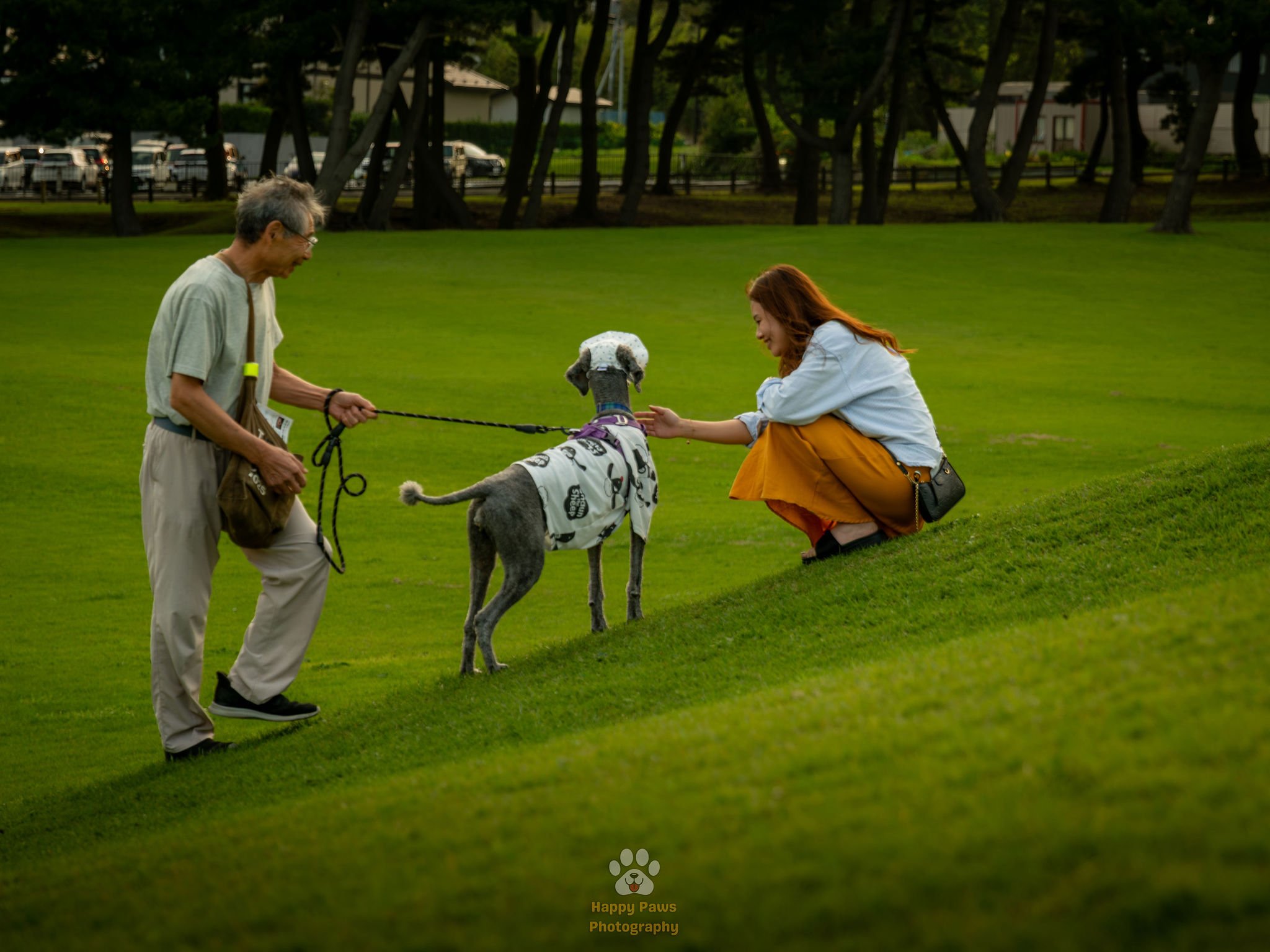
I have to meet them where they are.
Before a pet photography session, I try to learn what a dog already knows, what they like and dislike, what motivates them, and what makes them comfortable. During the session, I'm constantly paying attention and adjusting.
Sometimes that's food. Sometimes it's a favorite toy. Sometimes it's a particular sound.
And sometimes the best thing I can do is absolutely nothing for a few minutes.
Your Dog Is Communicating With You
Since moving to Japan, I've become much more aware of how easy it is to interpret someone else's communication through our own experiences.
Here's a slightly embarrassing example.
During one of my first visits to an izakaya—basically a Japanese dive bar—I sat down next to a woman who immediately started talking to me.
She pointed at me and said, atsui desu.
I didn't know what that meant, so out came Google Translate (still not sponsored).
“You are hot."
Well.
That was unexpectedly direct.
I thanked her and attempted to order my drink.
Apparently, that wasn't the response she expected.
She pulled out Google Translate again (please sponsor me).
“Your body is hot."
I thanked her again.
We were getting nowhere.
She tried one more time with our good friend and future sponsor, Google Translate: “No, no, no. You young men, your bodies are always so hot."
This time, she was holding her hands toward me like I was a fire.
Finally, I understood.
She wasn't telling me I was attractive.
She was telling me I was literally radiating heat.
Eventually, I learned that some of the expressions we use in English simply don't carry over the way we expect them to. What I heard through my American frame of reference meant something entirely different from what she was actually trying to communicate.
Although, for the sake of my ego, I should mention that I later learned that when someone tells me kakkoii desu, they're actually saying I'm handsome.
Thank you, Japan. And thank you to our extremely generous and handsome future sponsor, Google Translate.
Dogs aren't so different.
We see a dog panting and think they're smiling. But excessive panting when it isn't hot can be a sign of stress.
We might think eye contact means a dog is engaged and attentive, while prolonged direct eye contact can be uncomfortable or threatening for some dogs.
A dog who looks away isn't necessarily ignoring us. They may be communicating that they need space.
The signals are there. We just have to learn how to read them without automatically assigning our own meaning to them.
Sometimes Everyone Needs a Break
One of the most effective tools I have during a pet photography session isn't a squeaker, treat or toy.
It's taking a break.
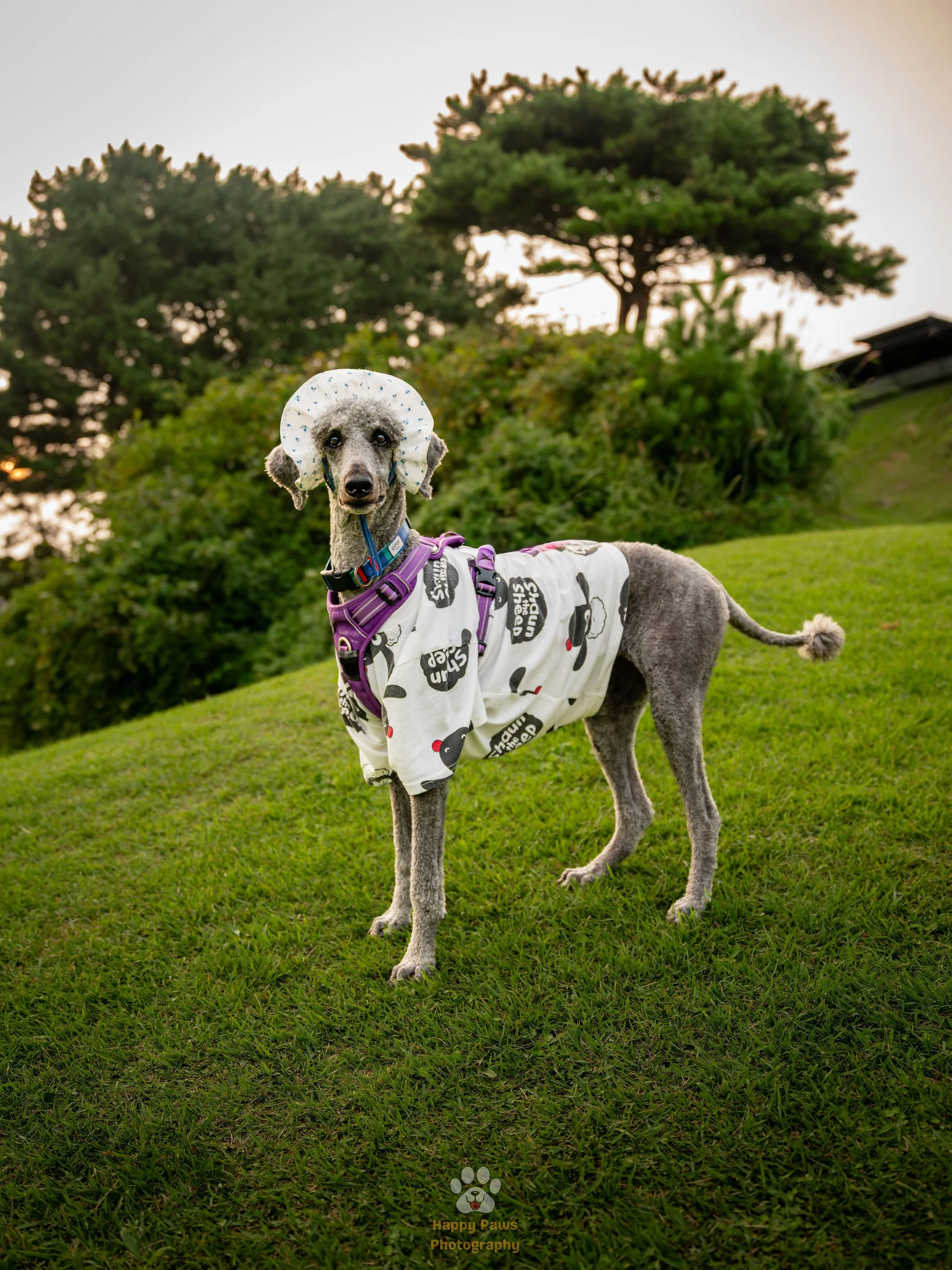
Sometimes I notice that the dog is becoming stressed. Maybe there's excessive panting, looking away or another change in their behavior that tells me they're reaching their limit.
But sometimes it's actually the pet parent who needs the break.
I understand why.
You're investing in portraits of an animal you love deeply. You want beautiful photographs. Then your dog decides that today is the perfect day to forget every command they've ever learned.
You start thinking, “My dog isn't behaving. We're not getting the photos. This isn't going to work."
And your dog feels that energy, too.
Dogs are incredibly sensitive to the people around them. Part of being a pet photographer is understanding animal behavior, but another big part of my job is understanding people.
So we stop.
We reset.
I let everyone know that we have time and that I'm not worried.
Because I'm not.
I've photographed enough animals to know that we don't need perfect behavior to create the perfect photograph.

Getting Curious Instead of Getting Frustrated
I've recently been reading Inside of a Dog by Alexandra Horowitz, and it's made me think even more about the similarities between learning another culture and learning to understand dogs.
Dogs have their own way of experiencing the world. Their own motivations. Their own ways of communicating.
That doesn't mean communication is impossible.
It means we have to pay attention.
Living in Japan has put me on the other side of that experience. I'm the one who doesn't always understand what's being said. I'm the one watching someone's expression, listening to their tone and trying to figure out what is happening from context. I'm the one hoping the person I'm communicating with will be patient when I get it wrong.
And I get it wrong. A lot.
Thankfully, I've also learned that a shared laugh and a little patience can get you surprisingly far.
Maybe that's one of the biggest things Japan has reinforced for me as a pet photographer.
Communication isn't about forcing someone else to understand you.
It's about getting curious enough to understand them.
Whether I'm trying to navigate a conversation in rural Japan or photographing a dog back in the DMV, I'm learning to do the same thing:
Pay attention. Be patient. Meet them where they are.
And don't forget to make it fun.